
We all know that oil palm is called ‘sawit’ in Malaysia and Indonesia, but have you ever wondered where this catchy little word came from? Driven by curiosity and a strong dose of caffeine, I plunged into some desktop research. What I uncovered was as layered as the oil palm’s fruitlets and spikelets – juicy, colourful, and full of thorns and twists at every turn. Buckle up, folks, because this is no ordinary etymology lesson!
One intriguing theory points to the Javanese phrase ‘sak wit’, meaning “one tree trunk.” Perfectly fitting for the oil palm’s strong and solitary stance. Adding a touch of folklore, there’s even a tale of a legendary giant tree that stood as a village landmark in Indonesia. The locals, inspired by its majestic presence, named their hamlet “Sawit.” Now, that’s what we call a name with roots!
Next, the Indonesian dictionary adds another layer: ‘sawitan’, which refers to matching outfits – same colour, same design. Could this symbolise the oil palm fruits ripening in harmony, clustered in their signature nigrescens reddish splendour – or their vibrant orange hue in the virescence variety? A fashionable take, no doubt.
And here’s where it gets poetic. In ancient Javanese, sawit is said to mean “necklace,” “rope” or “thread,” gracefully draped over the shoulder. A beautiful metaphor, isn’t it? Like a necklace, the oil palm weaves itself into the fabric of communities, connecting livelihoods and stories across generations.
But wait – there’s a quirky curveball from the Philippines! In Tagalog, sawit translates to “non-stop chatter.” We also call it speech diarrhoea! Now, whether this refers to the oil palm’s endless productivity or the fiery debates it sparks, for example – taxation, productivity, sustainability, EUDR or trade wars – is anyone’s guess. Either way, sawit certainly keeps the conversation going!
And just when you thought we were done, here’s a modern twist: SAWIT can also double as acronyms! For South Asian Women in Technology (SAWiT), it symbolises women empowerment in the digital age. Meanwhile, in South Africa, SAWIT also stands for the South African Wine Industry Trust. From palm oil to IT and wine, this word truly spans the globe.
A Spiky Connection: Oil Palm vs Snake Fruit
Did you know that oil palm or sawit is also called Kelapa Bali in Indonesia? Why, you ask? Beats me – it’s one of those botanical mysteries that even Google can’t crack.
But here’s a fun twist: in Bahasa Sunda in Indonesia, oil palm is affectionately dubbed salak minyak. Please – please, not “salah minyak” (meaning, wrong oil used)! This nickname couldn’t be more spot-on because, let’s face it, an oil palm fresh fruit bunch is practically the salak minyak of the agri-commodity world!
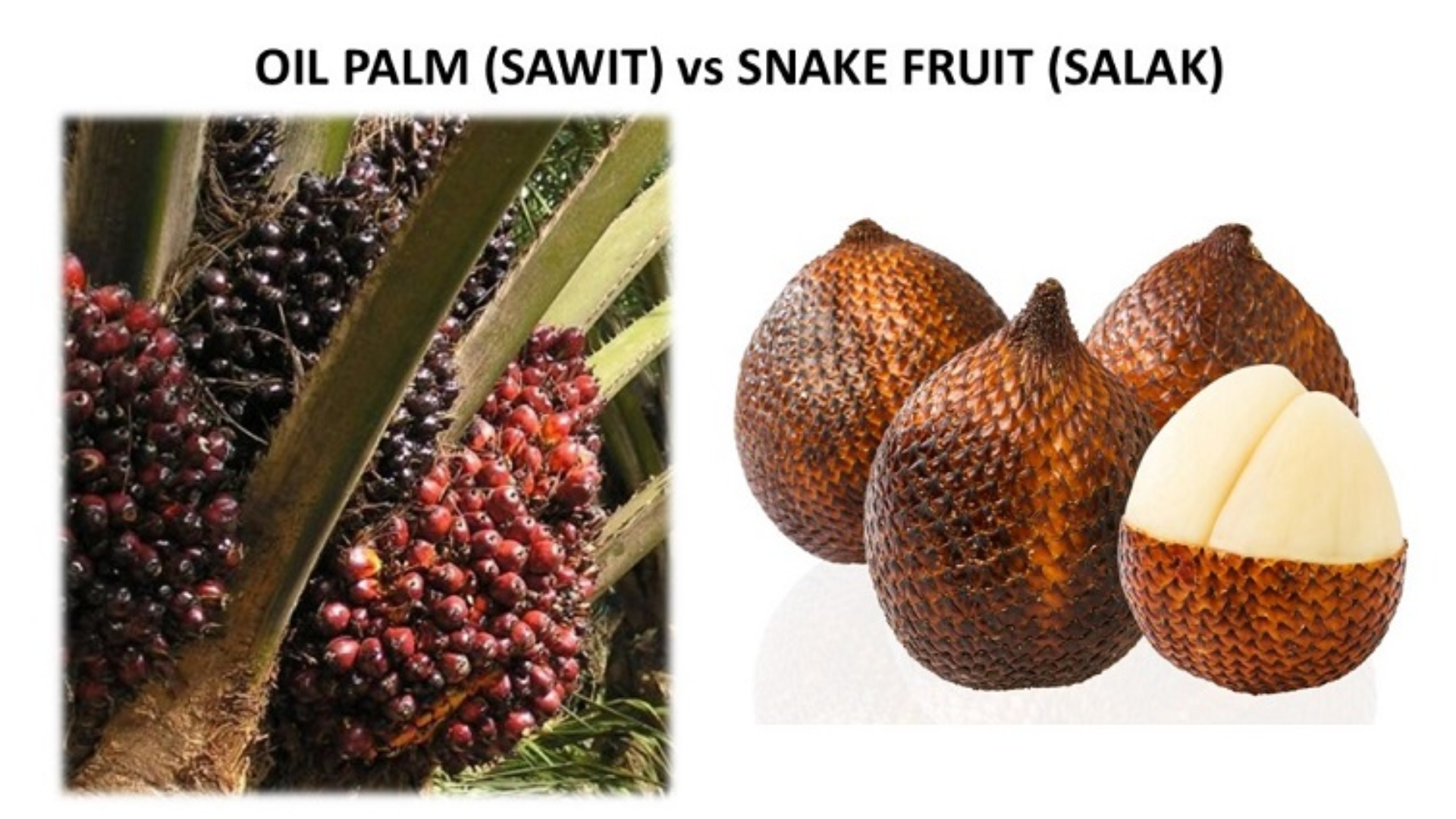
Think about it: the spiky thorns, the reddish hues and those tightly packed thorny spikelets – sounds like salak got a supersized makeover and went full-on industrial with its oil-packed goodness. Yes. Add “minyak” (oil) to the mix, and voilà, you’ve got a perfect metaphor for this tropical edible oil king – salak minyak.
By the way, salak isn’t just a random word. It’s Sundanese term for “silver,” a nod to the shimmering, scaly look of its skin. It’s almost as if both the oil palm and the snake fruit were designed to be nature’s armoured treasures, each brimming with hidden value.
Salak, also known as snake fruit, is a close cousin in the palm family, native to Indonesia and Malaysia. Its scaly, snake-like skin is an immediate head-turner, but what’s inside is where the magic happens. Beneath that tough exterior lies sweet, tangy flesh that can be slightly astringent, depending on the variety. But be careful – those seeds are hard as rocks.
I first encountered this quirky fruit during my 1990s stint in Sandakan at Checkpoint Mile 32. There, local stalls proudly displayed salak among a variety of other tropical fruits. Naturally, I had to bring some back to KL, where it became a conversation starter among friends and family who had never seen such a thing.
Fast forward to my trip to Sumatra for conference, and I discovered Salak Madu – larger, juicier and sweeter than its smaller cousins. It was like salak’s dessert upgrade, dripping with honeyed goodness. Who knew a fruit could have a gourmet evolution?
The comparison between oil palm and salak is uncanny. Both share a tough, spiky exterior but offer incredible value. Oil palm fuels food uses and industries with its golden oil and derivatives, while salak delivers a unique and natural snack. Maybe calling oil palm salak minyak isn’t just poetic – it’s a tribute to the resilience and brilliance of palm botanical species.
The next time you see an oil palm fresh fruit bunch or a scaly salak, take a moment to appreciate the connection. Who knew that two prickly, misunderstood plants could teach us so much about resilience, utility and the unexpected joys of nature?
As if the oil palm and snake fruit weren’t already united by their spiky exteriors and surprising uses, did you know that the word salak has popped up in unexpected places worldwide? It’s not just a fruit – it’s practically a brand name at this point!
In Malaysia, salak has become synonymous with locations like Salak Tinggi, Salak South, Pasir Salak and even Kg Salak in Sepang. And, let’s not forget the Salak Expressway (East–West Link Expressway) in the Klang Valley – talk about a speedy highway connection to the salak legacy! It’s like salak’s spiky persona is inspiring road signs and town names across the country.
But the salak journey doesn’t stop at Malaysia’s borders. In Indonesia, you’ll find Mount Salak, a towering mountain in West Java. You can even visit Salak – a town and district in North Sumatra province of Indonesia, the capital of Pakpak Bharat Regency, where the fruit’s legacy continues to grow. And if that’s not enough, there’s also a village named Salak in South Khorasan Province, Iran. How about Salak in far north region of Cameroon? A charming village in Central Africa, no less.
Turns out, this humble fruit has made its mark on the world, from the jungles of Southeast Asia to Africa, proving that sometimes, the most unexpected things can take root far beyond where they started. Talk about a global presence!
PROJEK SAWIT for Sandakan
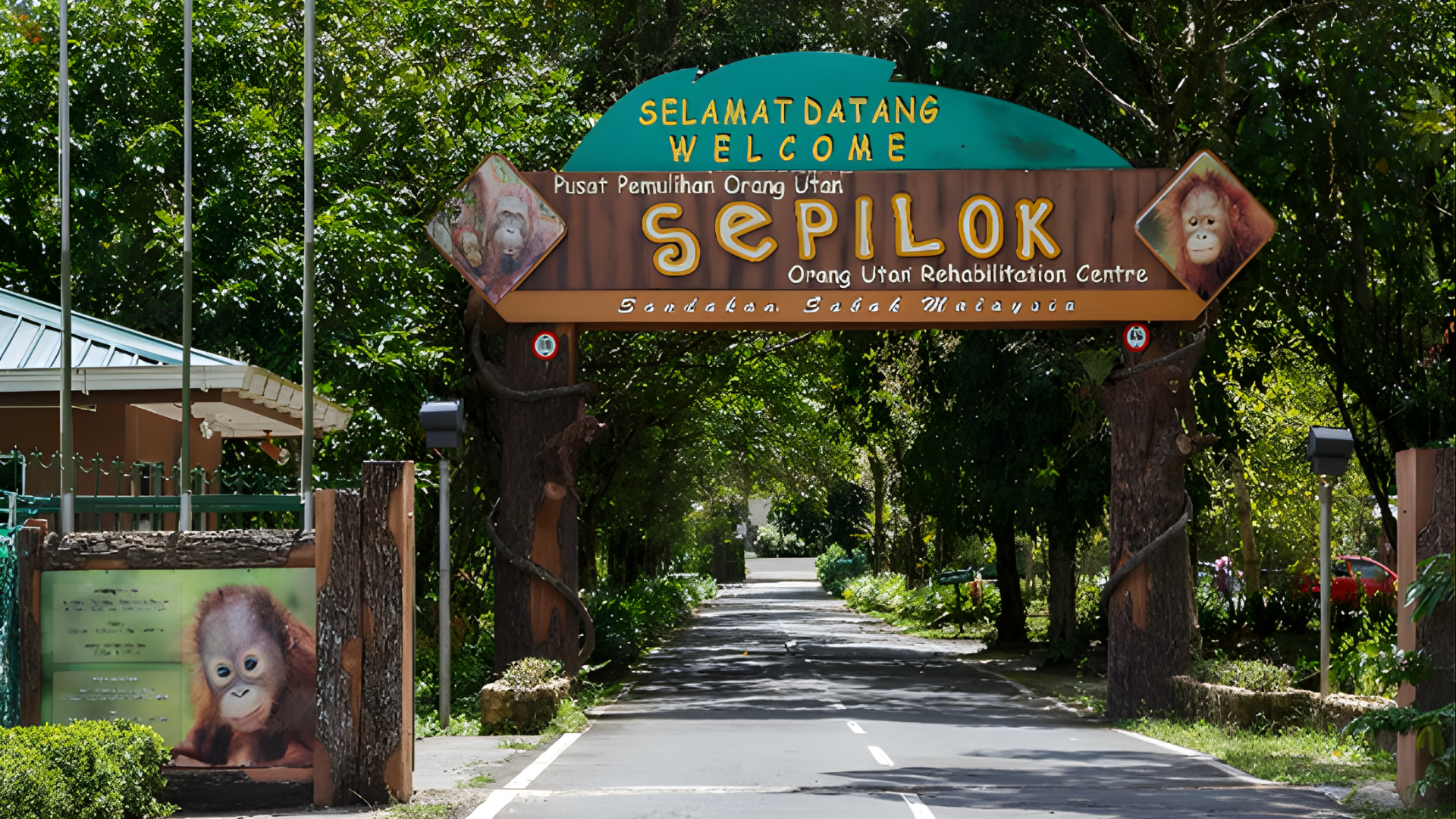
In Sandakan, a bold idea germinated like an oil palm seed – a proposal to establish an Oil Palm Park & Information Centre (OPPIC) two decades ago. This was to be spearheaded by the Sandakan Municipal Council (MPS). The vision? To showcase palm oil’s golden legacy to the world especially the throngs of visitors to Sandakan while addressing the proverbial elephant – or orangutan – in the room: the negative perceptions linking oil palm to the plight of orangutan and other aspects of the industry.
OPPIC was imagined as more than just a tourist attraction; it was designed to be beacon of knowledge. Think of it as a one-stop hub where palm oil’s historical journey, R&D breakthroughs, and the multiplicity of its derived products could be showcased. Whether it was tourists flocking to Sepilok Orang Utan Rehabilitation Centre, students hungry for knowledge or locals seeking inspiration, OPPIC promised to immerse them in the stories of Sabah’s golden crop.
As the K-Economy emerged, OPPIC was conceived as a platform to transform information into a powerful asset – curating, crafting and sharing valuable insights. It presented the oil palm industry with a unique opportunity to reshape its narrative, emphasising its vital role in Sabah’s social and economic fabric while fostering a balanced and nuanced dialogue on sustainability.
When I joined IJM Plantations, one of my first assignments was to draft the concept paper for an ambitious project. However, every grand vision comes with an equally daunting challenge: securing funding. We needed millions of ringgits to transform the OPPIC concept into reality. That’s when inspiration struck, leading to the creation of Projek SAWIT
Drawing inspiration from the Badminton Association of Malaysia’s (BAM) fundraising initiative—remember those BAMbee license plates? I proposed a similar idea. Picture this: exclusive number plates, SAWIT 1 to SAWIT 9999, proudly cruising across Malaysia as a rolling tribute to the nation’s oil palm industry. Plantation corporations, agencies, and planters could be encouraged to purchase these plates, creating a revolving trust fund to sustain OPPIC. Clever, right?
But at the time, I was just a greenhorn – tak cukup makan garam, as the saying goes. Over the years, I’ve come to understand that success often hinges not just on innovative ideas but on the champions who drive them forward. It’s usually those in positions of authority and influence who hold the power to make or break visions and ideas.
The “sawit” legacy, however, extends far beyond its roots. From Bukit Sawit in Kalimantan to Sawit Seberang in Sumatra, and countless kampungs in between, the name “sawit” has become a badge of pride across Malaysia and Indonesia. Plantation companies have also embraced this iconic name, incorporating it into the identities of their estates, mills, and even cafeteria menus. It’s a testament to how deeply intertwined “sawit” is with the culture, livelihoods, and landscapes of the region.
Kelapa Sawit Town and Paranormal Tales
Did you know the name “sawit” has a knack for cropping up in place names? On of it is in a charming little town of Kelapa Sawit in Johore! Nestled along Jalan Kulai-Air Hitam with the memorable postcode 81000, this town boasts a rich history and some seriously fascinating tales.
Kelapa Sawit ‘pekan’ was born in the 1950s, during the Malayan Emergency, when the British colonial administration relocated tens of thousands of ethnic Chinese into New Villages like this one. Today, it’s a haven of Hakka heritage, where the older generation still converses in the Hakka dialect, keeping the town’s culture alive amidst its relaxed, unhurried vibe. It’s also a magnet for weekend tourists, particularly from Singapore, who come seeking a quiet escape from city life.
But beneath its peaceful charm lies a tale straight out of The Twilight Zone, not The Travel Channel. Back in the 1990s, during my visit to the oil palm breeding trials near Kelapa Sawit, I heard spine-chilling whispers from the planters about the local police station. Or was I just the target of their playful mischief?
This wasn’t your average law enforcement outpost – it was allegedly infamous not for heroic police work but for its eerie, paranormal reputation. According to the planters, this lockup had earned its stripes as one of Malaysia’s most haunted spots. Whether their claims were real or a crafty initiation ritual for visitors like me, the story still lingers, sending shivers down spines to this day.
The stories go like this: detainees report sleepless nights filled with dread, with some so terrified they lose control of more than just their nerves, including the control of their bladders! It’s said to be haunted by restless spirits, possibly dating back to the World War-2 or Emergency era.
Since it has been dubbed by some as the “scariest police station lockup in Malaysia,” it could easily be rebranded as the ultimate ghost-tourism hotspot. Imagine a “Stay One Night If You Dare” challenge – surely more thrilling than any escape room! It will not disappoint enthusiasts with its Ghostbusters-level chills.
The “sawit” legacy doesn’t stop there. From Bukit Sawit in Kalimantan to Sawit Seberang in Sumatra, and countless kampungs in between, the name “sawit” has become a symbol of pride across many regions.
Even plantation companies have adopted it, branding estates, mills, and perhaps even cafeteria menus with the name. It’s a testament to how deeply embedded “sawit” is in the cultural and economic fabric of the region.
Untangling Palms: Oil Palm or Palm Oil?
Finally, here’s a little confession that might ruffle a few feathers – especially among my friends in the media covering news about the oil palm industry. Did you notice it? I said ‘oil palm industry,’ not ‘palm oil industry.’ Yes, we’re going there.
One of my biggest pet peeves – let’s call it my tree trigger – is when people, including well-meaning journalists and writers (bless their hearts!), casually interchange these terms. It might seem like splitting hairs – or in this case, fronds – but trust me, the distinction matters.
Here’s the scoop: when we’re talking about the tree, the crop and everything happening upstream – like the plantation, planters, estate owners and the millions of smallholders making it all possible – that’s the oil palm industry. It’s all about cultivation, sweat and tear and a whole lot of dedication. The palm oil industry, on the other hand, is where things get glamorous- dealing with the palm products. It kicks in downstream with refineries, oleochemicals, packers and all those jazzy parts of the palm oil value or supply chain.
And where do palm oil mills fit into the grand scheme? These humble workhorse plants – processing fresh fruit bunches into crude palm oil – are the crucial bridge between upstream and downstream. Some might even argue they’re the midstream middle child of the supply chain. (Are palm oil mills technically upstream, downstream or this mythical midstream? Let us park that debate for another day before we spiral into a black hole of semantics.
Here’s the billion-ringgit question: When we talk about the entire plantation sector in Malaysia, what should we call it? My vote? Stick with oil palm industry. Why? Because upstream is where the real magic starts. It’s the beating heart of the operation, contributing the lion’s share of revenue and involving a much larger ecosystem of players. Everything begins with a seed, long before it becomes that shiny golden oil we know and love. While all are intertwined, without upstream there’s no downstream, the starting block is from the ground.
In Bahasa Malaysia, this distinction exists too: “industri kelapa sawit” versus “industri minyak sawit.” My suggestion? Keep it simple with “industri sawit.” It’s inclusive and nobody has to get their fronds in a twist.
Misidentifications of Oil Palm Trees
Next, let’s dive into another egregious pet peeves in the realm of oil palm or palm oil reporting: the crime of misidentifying oil palm trees in media coverage. You’re reading an article about oil palm, and there it is – a perfectly unrelated date-palm photo staring back at you. It’s as if someone wrote a compelling story about elephants and decided a woolly mammoth was an acceptable stand-in for a photo. What’s next? A feature on koala accompanied by a picture of a kangaroo?
In my past, whilst managing corporate or association related press releases, I had the distinct pleasure (and occasional frustration) of picking up the phone or WhatsApp to correct these glaring oversights. “Sorry to bother you, but that’s not a palm oil tree, it’s a date-palm. Yes, there’s a difference.”
Here’s a fun botany lesson for those who skipped Plant Science 101. The Arecaceae plant family, home to palms, includes about 2,600 species of monocots. Some climb, some crawl and some stand tall like majestic sentinels. But – and this is crucial – not all palms are created equal.
Oil palms (Elaeis guineensis) are the bread-and-butter or should I say oil-and-margarine of this industry. They’re tropical powerhouses, thriving in humid climates and churning out impressive tonnes of oil per hectare annually, with room for further improvements. Date palms, coconut trees and their other Arecaceae cousins don’t hold a candle to this productivity.

Blimey! This is NOT an oil palm tree – it’s a date palm (Phoenix dactylifera). Let’s not mix up our fronds, shall we?
With all the buzz about AI technology, it’s hard not to raise an eyebrow at some of the generated images featuring oil palm trees and estate operations. Oh boy, these images are as believable as a unicorn trying to sell you a used car. Honestly, many of them are so fake, they might as well come with a neon sign flashing, “Definitely not real!”
Have you ever seen AI try to depict oil palm trees with fresh fruit bunches? It’s like the AI took a crash course in botany from a cartoon character or Googled “tropical fruit” on dial-up. And don’t even get me started on its take on estate operations – apparently, AI thinks it’s all about factory-like precision with sleek machinery gliding effortlessly around. Newsflash, AI: it’s actually a whole lot more rain, sweat, and good old-fashioned hard work under a blazing tropical sun! Maybe users need to tweak their specs on Discord or whatever app they’re using to tell the AI, “No, the oil palm trees shouldn’t look like they’re straight out of an 80s video game.” It’s proof that while AI has come a long way, it’s still miles away from understanding the real magic behind the golden crop!
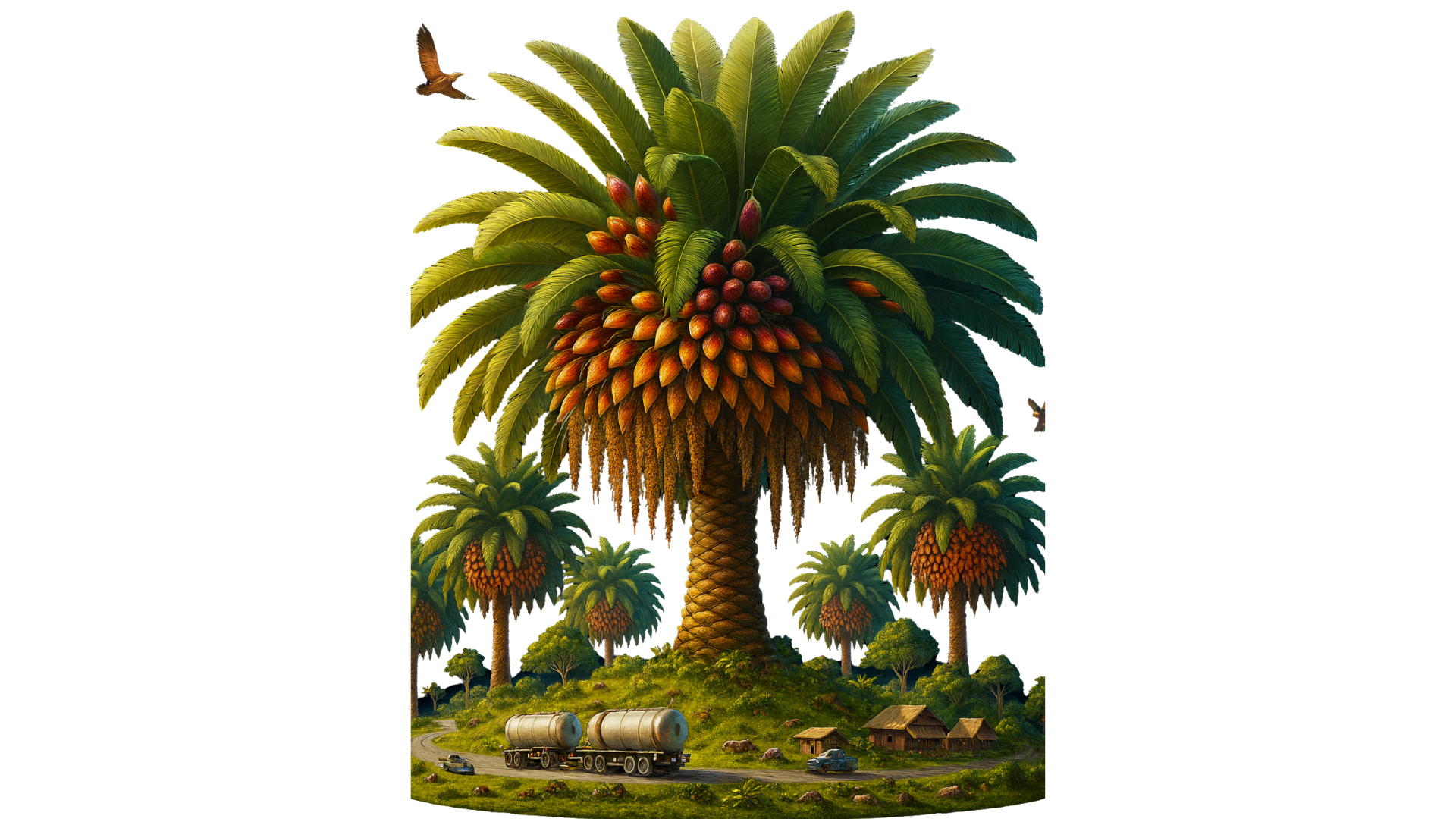
An AI-generated image of oil palm trees with fresh fruit bunches is hilariously off the mark.
This is precisely why media outreach should be a top priority for the industry. If we want people to take oil palm issues seriously, we must ensure the stories are told with accuracy – right down to the headlines and photos. It’s high time we offer our media friends and stakeholders a little Oil Palm 101, along with familiarisation visit programs, so they don’t confuse the oil palm with its distant, date-bearing cousin. After all, getting the facts straight starts with getting the visuals right!
So, the next time you see a photo of a towering date palm or a serene coconut tree accompanying an article about oil palms, remember: someone’s getting their palms crossed. Let’s give our hardworking oil palms the recognition they deserve. Language and photos play a crucial role in how we understand and respect industries. When we use the right terms and images, we honour the crop, the people, the processes and the value chains that keep everything running.
After all, oil palm products don’t just grow on trees – they grow livelihoods. And it’s our job to share those stories and images with accuracy and respect.